Running a small business is not easy.
As a business owner, you’re often responsible for sales, customer service, marketing, operations, and administration. While managing all these tasks, keeping track of customer information can quickly become overwhelming.
Many small businesses start by using spreadsheets, notebooks, emails, and messaging apps to manage customer relationships. While this approach may work initially, it often becomes difficult to manage as the business grows.
This is where CRM software becomes valuable.
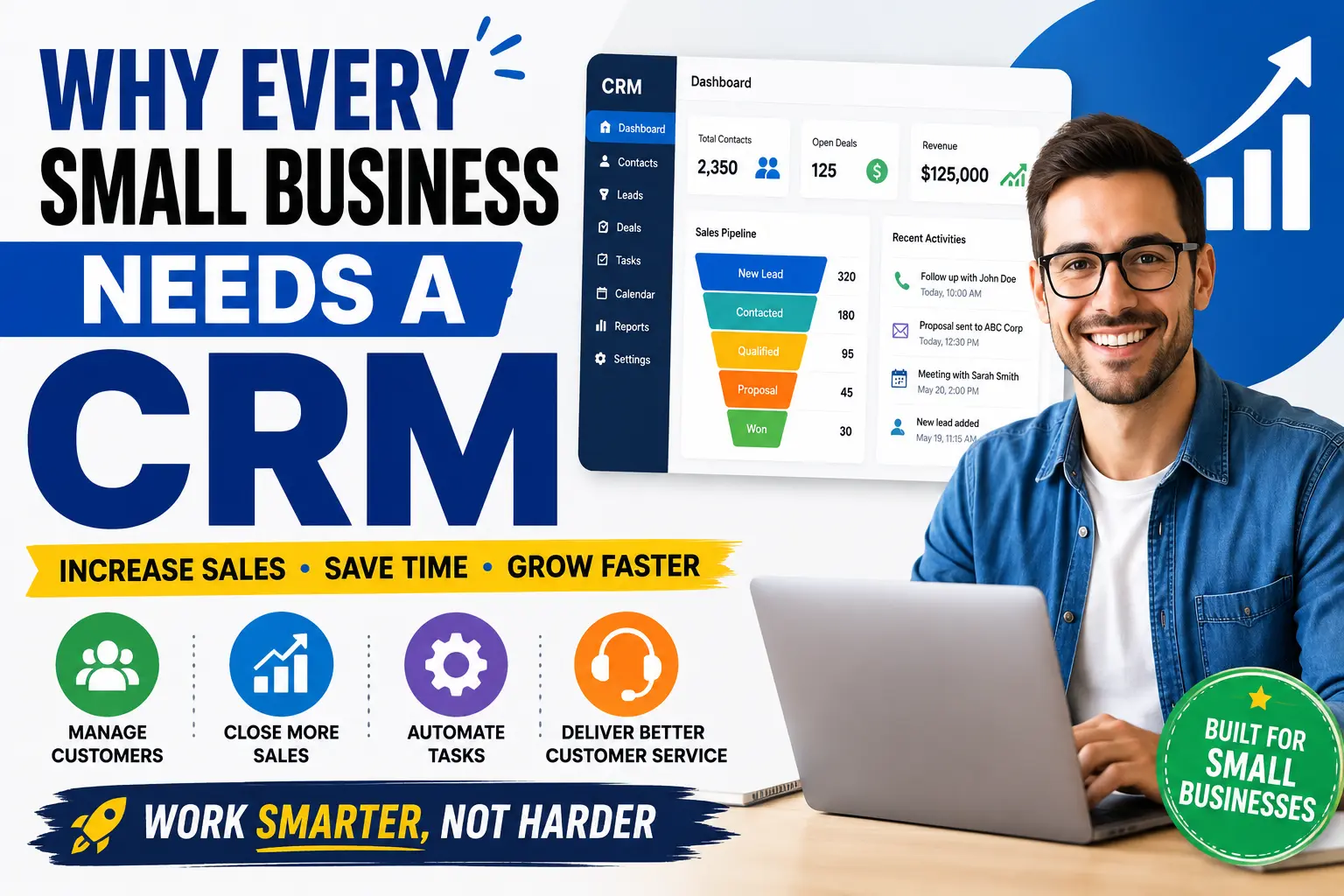
A Customer Relationship Management (CRM) system helps small businesses organize customer information, improve communication, automate routine tasks, and increase sales opportunities.
In this guide, we’ll explore why every small business should consider using a CRM and how it can contribute to long-term growth.
What Is a CRM?
CRM stands for Customer Relationship Management.
A CRM is software that helps businesses store customer information, track interactions, manage leads, and monitor sales activities from a centralized platform.
Instead of relying on scattered records, businesses can access everything related to a customer in one place.
The Challenges Small Businesses Face Without a CRM
Many small businesses experience common problems when customer data is managed manually.
Lost Customer Information
Customer details often end up spread across:
- Emails
- Excel spreadsheets
- WhatsApp chats
- Paper notes
- Different team members
This makes information difficult to find when needed.
Missed Follow-Ups
Potential customers may be forgotten simply because there is no system to remind employees about follow-up calls or emails.
Missed follow-ups often mean lost sales opportunities.
Poor Team Communication
Without a centralized system, team members may not know the latest updates regarding a customer.
This can lead to confusion and inconsistent customer experiences.
Limited Visibility
Business owners often struggle to answer important questions such as:
- How many leads do we have?
- Which deals are close to closing?
- Which sales representative is performing best?
- Where are customers coming from?
A CRM helps answer these questions through reporting and analytics.
1. CRM Helps Organize Customer Information
One of the biggest benefits of CRM software is centralized customer management.
Instead of searching through multiple sources, businesses can store:
- Names
- Phone numbers
- Email addresses
- Company information
- Purchase history
- Communication records
- Meeting notes
Having all information in one place improves efficiency and reduces mistakes.
2. CRM Helps Small Businesses Close More Sales
Every lead represents a potential customer.
However, many businesses lose leads because they fail to follow up consistently.
CRM software helps by:
- Tracking every lead
- Managing sales pipelines
- Scheduling follow-ups
- Monitoring deal progress
Sales teams can clearly see which opportunities require attention.
This increases the likelihood of converting leads into paying customers.
3. CRM Improves Customer Relationships
Customers expect personalized experiences.
A CRM helps businesses remember important details about customers, including:
- Previous purchases
- Support requests
- Communication history
- Preferences
When customers feel understood and valued, they are more likely to remain loyal.
Strong relationships often lead to repeat business and referrals.
4. CRM Saves Time Through Automation
Many daily business tasks are repetitive.
CRM software can automate activities such as:
- Lead assignments
- Follow-up reminders
- Welcome emails
- Appointment scheduling
- Workflow notifications
Automation reduces manual work and allows employees to focus on more important responsibilities.
For small teams with limited resources, this time savings can be significant.
5. CRM Improves Team Collaboration
As businesses grow, multiple employees may interact with the same customer.
Without a CRM, communication gaps can occur.
A CRM provides a shared customer record that everyone can access.
Sales, marketing, and customer support teams can work together more effectively because they all have access to the same information.
6. CRM Provides Valuable Business Insights
Successful businesses rely on data to make decisions.
CRM reporting tools help owners understand:
Sales Performance
Track revenue, deals, and conversion rates.
Lead Sources
Identify where the best leads are coming from.
Customer Retention
Monitor repeat purchases and customer loyalty.
Team Productivity
Measure employee performance and activity levels.
These insights help businesses improve their strategies and allocate resources more effectively.
7. CRM Supports Business Growth
Many small businesses rely on manual processes during the early stages.
As customer numbers increase, manual systems become difficult to manage.
CRM software creates scalable processes that support future growth.
Whether you have:
- 50 customers
- 500 customers
- 5,000 customers
A CRM helps maintain organization and efficiency.
8. CRM Helps Deliver Better Customer Service
Customer service plays a major role in business success.
When support teams can quickly access customer information, they can:
- Resolve issues faster
- Provide personalized support
- Reduce response times
- Improve customer satisfaction
A positive customer experience often results in higher retention rates and stronger brand reputation.
Real-Life Example
Imagine a small web design agency.
Without a CRM:
- Leads arrive through email.
- Follow-ups are tracked manually.
- Client notes are stored in different places.
- Team communication becomes difficult.
With a CRM:
- Leads automatically enter the system.
- Follow-up reminders are scheduled.
- Client information is centralized.
- Team members stay informed.
The result is a more organized business that can serve customers more effectively.
Signs Your Small Business Needs a CRM
You may need a CRM if:
- You regularly forget follow-ups.
- Customer information is difficult to find.
- Your team struggles to stay organized.
- Sales opportunities are being missed.
- You use multiple spreadsheets to manage contacts.
- Business growth is becoming difficult to manage.
If any of these situations sound familiar, implementing a CRM could make a significant difference.
Popular CRM Solutions for Small Businesses
Many CRM platforms are designed specifically for small businesses.
Popular options include:
- HubSpot CRM
- Zoho CRM
- Pipedrive
- Freshsales
- Salesforce Starter Suite
- Monday CRM
Each platform offers different features and pricing models depending on business requirements.
Common Concerns About CRM Software
“My Business Is Too Small”
Even solo entrepreneurs can benefit from CRM software.
Building organized systems early often prevents future problems.
“CRM Software Is Expensive”
Many CRM providers offer free plans and affordable entry-level options.
“CRM Software Is Complicated”
Modern CRM platforms are designed to be user-friendly and require minimal technical knowledge.
Final Thoughts
Customer relationships are one of the most valuable assets a small business can have.
A CRM helps businesses manage those relationships more effectively by organizing customer information, improving communication, automating repetitive tasks, and providing valuable insights.
As competition continues to increase, small businesses that invest in efficient systems often gain a significant advantage.
Whether you’re looking to improve customer service, increase sales, or prepare for growth, implementing a CRM can be one of the smartest investments your business makes.
Frequently Asked Questions
Why do small businesses need CRM software?
CRM software helps small businesses organize customer information, improve follow-ups, increase sales, and streamline daily operations.
Can a small business use a free CRM?
Yes. Many CRM providers offer free plans that are suitable for startups and small businesses.
Is CRM software difficult to learn?
Most modern CRM platforms are designed to be easy to use, even for beginners.
What is the biggest benefit of CRM software?
The biggest benefit is centralized customer management, which helps improve relationships and business efficiency.
When should a small business start using a CRM?
Businesses should consider implementing a CRM as soon as customer information becomes difficult to manage manually.